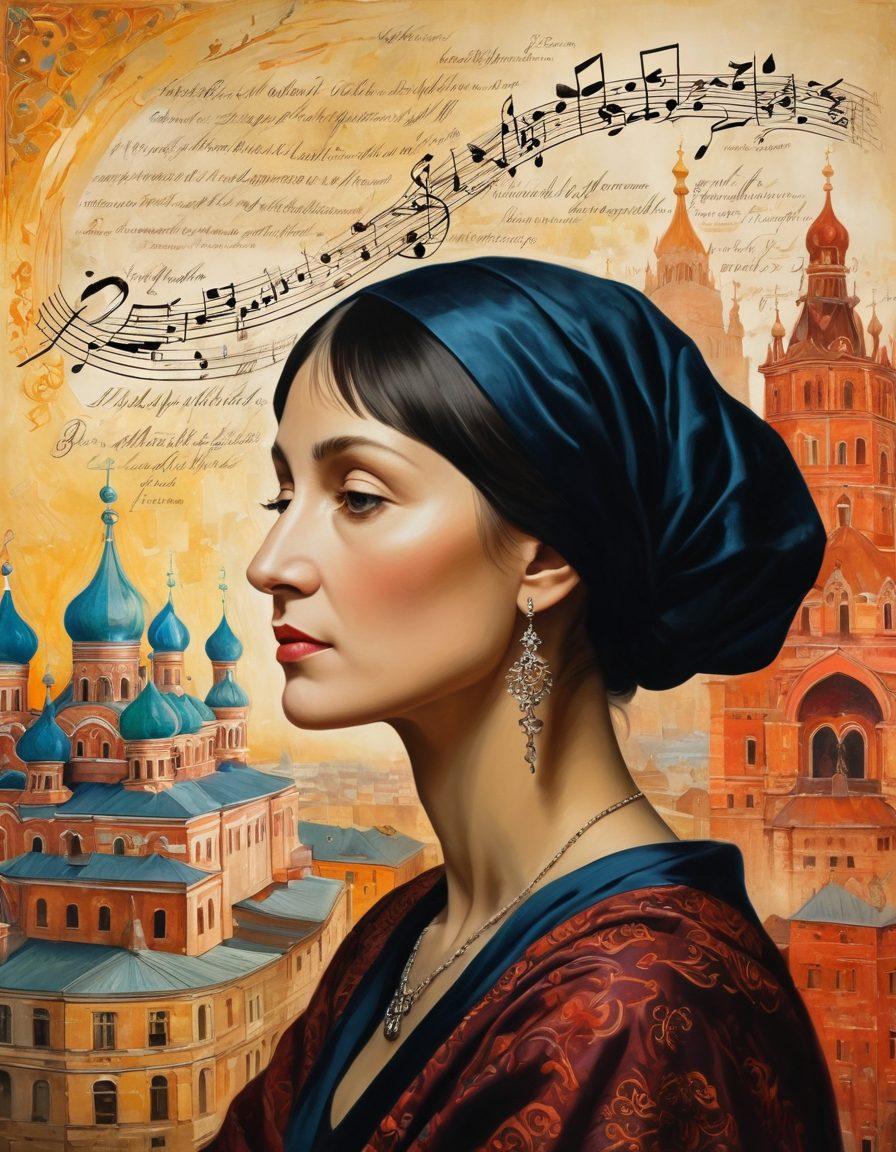
The Timeless Legacy of Anna Akhmatova: A Beacon of Russian Poetry and Culture
Anna Akhmatova’s journey through the turbulent waters of Russian poetry is nothing short of enthralling. Renowned as one of the most significant voices of the 20th century, Akhmatova’s transformation from Symbolism to Acmeism marks a pivotal moment in Russian literature. But what was it about her evolution that forever etched her name in the annals of literary history? Her life and works are a testament to resilience, creativity, and the indomitable spirit of the Russian poet amidst adversity.
Akhmatova initially rose to fame as a leading figure in the Symbolist movement. Symbolism, with its intricate imagery and mystical undertones, allowed her to express profound emotions and abstract concepts. Through her early works, she painted vivid pictures of love, loss, and longing, captivating the imaginations of St. Petersburg poets and the broader Russian literary community. Yet, even within this realm of ethereal beauty, Akhmatova sought something more concrete, more rooted in the tangible experiences of ordinary life.
Enter Acmeism. Disillusioned by the ambiguity of Symbolism, Anna Akhmatova, along with other Russian writers, embraced Acmeism—a movement focused on clarity, precision, and the concrete. This shift was more than a mere stylistic change; it represented a deeper philosophical transformation. In her Acmeistic phase, Akhmatova’s poetry became a beacon of Russian culture, foregrounding the direct and the personal, while still retaining a lyrical depth that resonated with the trials and tribulations of the Russian people.
Akhmatova’s poetic evolution reflected the broader upheavals in Russian society and literature. Her ability to adapt and innovate allowed her to remain relevant even as political and cultural landscapes shifted dramatically. Her poetic works, from the early Symbolist verses to her later Acmeistic compositions, serve as a bridge in Russian literary history, connecting the silver age poets to the modernist movements that followed. She deftly navigated the waters of Russian modernism, her voice a constant amid the chaos of wars, revolutions, and repression.
Moreover, Akhmatova’s lyrical poetry embodied the essence of feminine poetry, capturing the nuanced experiences and inner worlds of women in a way that few before her had managed. Her relatable and often deeply personal verses struck a chord with readers, ensuring her legacy as one of the paramount Russian poetic voices. In celebrating Anna Akhmatova, we not only honor a key figure in Russian literary heritage but also acknowledge the power of poetry to transcend time and place, providing solace, voice, and understanding across generations.
The Emotional Palette of a 20th Century Lyricist: Akhmatova's Influence on Russian Literature
When one thinks of 20th-century poets who have profoundly molded the soulful landscape of Russian literature, Anna Akhmatova invariably comes to mind. Heralded as one of the most poignant voices among the silver age poets, Akhmatova's words have become a compass for understanding the depth of Russian cultural and emotional life. How did this remarkable woman use her brilliance to carve a permanent niche in Russian literary history? We need only delve into her evocative verses to find the answers.
Anna Akhmatova, a monumental figure in Russian poetry, wielded a pen that painted with the deepest shades of human emotion. Her lyrical poems often flirted with themes of love, loss, and the inexorable passage of time, resonating across both personal and public domains. Rather than indulging in the abstract, her work was grounded in real experiences and relationships, making her one of the most relatable Russian poets. Through her vivid imagery and poignant storytelling, she not only captivated but also influenced countless other Russian writers of her time and beyond.
Emerging from the vibrant and tumultuous backdrop of St. Petersburg, Akhmatova's formative years were spent amongst the giants of Russian modernism. Yet, even within such a remarkable crowd, her unique voice stood out. Akhmatova was a master of acmeism—a movement that emphasized clarity, precision, and the tangible reality of the everyday over the ethereal symbolism that many Russian authors of the time favored. This approach allowed her to create a more accessible and deeply emotional form of poetry that spoke directly to the hearts of her readers.
Akhmatova's poetic works are a testament to the resilience of the human spirit, especially under regimes that sought to suffocate artistic and personal expression. Her verses reflect not only a personal chronicle but also a collective memory of the trials faced by the Russian people through wars and political upheaval. This underlines her lasting influence as she provided a voice to the voiceless, transforming Russian lyrical tradition. Consider this line from her poem 'Requiem': 'I am with you in your crushing pain.'—A testament to her deep well of empathy and solidarity.
Today, Akhmatova's legacy remains a beacon for understanding and appreciating Russian culture and feminine poetry. Contemporary audiences continue to find solace and inspiration in her carefully crafted lines. She is discussed not only in literary circles but also in broader cultural contexts, reaffirming her role as a linchpin in Russian literary history. The timeless nature of her emotional palette urges us to consider the ongoing impact of her work. How have her themes and stylistic choices permeated modern Russian voices? In what ways do her words still echo through the corridors of today's literary world? These questions ensure that the legacy of Anna Akhmatova will endure for generations to come, her voice steady and unwavering among the chorus of classical Russian poetry.
Akhmatova and the Silver Age: Revisiting the St. Petersburg Poet's Contributions to Russian Modernism
When we talk about the rich tapestry of Russian literature, one name inevitably stands out: Anna Akhmatova. As a cornerstone of Russian modernism, her contributions during the Silver Age of Russian poetry shine as brightly as ever. Strolling through the storied streets of St. Petersburg, one can almost hear the whispers of her lyrical verses, echoing the turbulence and grandeur of the early 20th century. But what exactly makes Akhmatova’s work resonate so profoundly in both Russian literary circles and beyond?
Akhmatova's journey as a Russian poet began during a time of creative explosion known as the Silver Age. Her association with the Acmeist movement, a reaction against the elusive nature of symbolism, grounded her poetry in clarity, precision, and emotional depth. Unlike the florid and obscure style of her predecessors, her words were vivid yet straightforward, making them immensely relatable. Consider her poignant line, 'No one is forgotten, nothing is forgotten,' which captures the essence of her emotional depth and narrative purity.
It's this blend of personal vulnerability and universal themes that has cemented Akhmatova's place among the greats of Russian literature. Her poetic works often weave intense personal experiences—grief, love, and loss—into the broader fabric of Russian historical and cultural identity. Amidst political upheaval and personal heartache, her poetry acted as a mirror to the collective soul of her people. Can you imagine the courage it must have taken for her to write amidst the oppression and censorship of the Soviet era, yet still manage to produce verses that resonate with Russian poetic voices to this day?
Despite facing immense hardship, Akhmatova never abandoned her craft. Her ability to convey the feminine experience, while also tapping into universal emotions, created a new form of lyrical poetry that broke contemporary molds. The St. Petersburg poet skillfully utilized the city’s haunting beauty and storied history as a backdrop for her work. The streets, rivers, and landmarks of St. Petersburg thus became silent witnesses and active participants in her narratives, adding layers of meaning to her already profound literature. In doing so, she not only expanded the Russian poetic tradition but also enriched the global literary heritage.
In retrospect, Anna Akhmatova's influence on Russian culture and the broader scope of 20th century poetry is monumental. Her mastery of both acmeism and her own unique voice paved the way for future Russian writers to explore a blend of personal and political themes. Akhmatova's legacy stands as a testament to the power of resilience, authenticity, and the written word. Whether you are a seasoned aficionado of Russian lyrical tradition or new to the world of classical Russian poetry, revisiting her work offers a timeless exploration of human emotion, courage, and the kaleidoscopic facets of life. So next time you find yourself lost in the engrossing depths of Russian verses, let Anna Akhmatova guide you as a beacon of poetic brilliance and cultural insight.